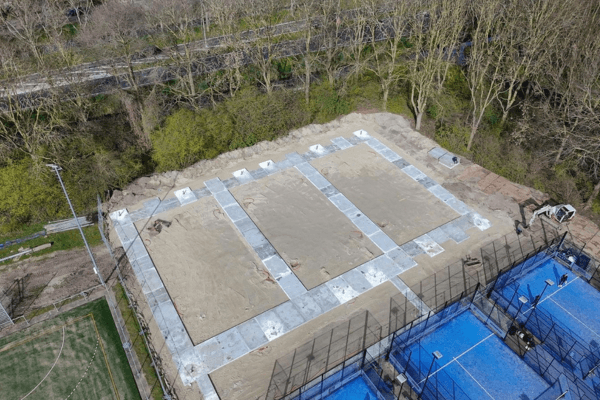
More and more tennis clubs and sports parks choose to convert existing tennis courts into padel courts. Padel is growing rapidly in the Netherlands and is attracting a new, younger crowd. By making smart use of existing space, you increase the range of games, rejuvenate your membership and make optimal use of your accommodation. Two or three full padel courts usually fit on one tennis court, an efficient way to increase playing capacity without buying extra land.
Allesvoorpadel specialises in converting tennis courts into professional padel courts. We take care of the entire process: from location analysis and permit application to groundwork, foundation, cage construction and delivery ready to play. So we ensure that your club or sports park makes the switch to padel without any worries.
We are happy to help!
This is how we convert your tennis court into a full-fledged padel courts
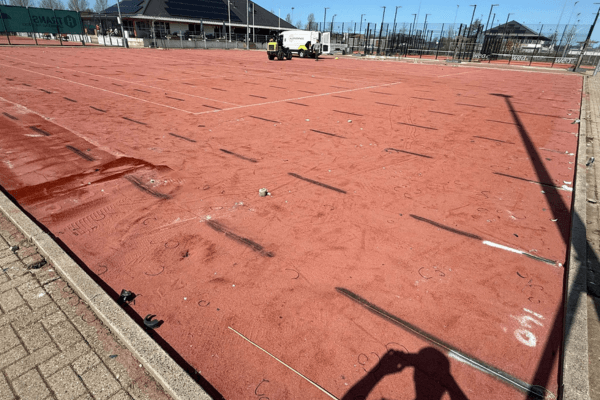
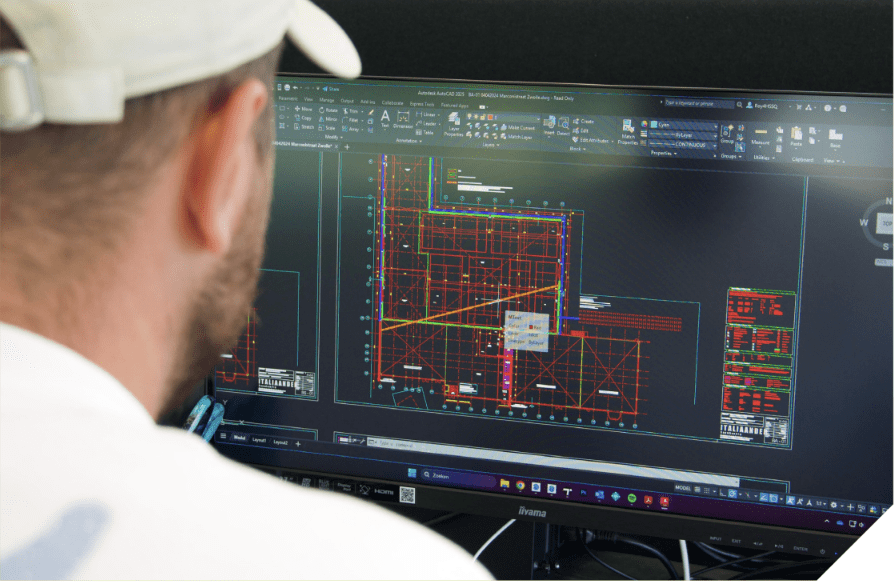
We start with a thorough assessment of your existing tennis court. Our specialists inspect the foundation, surface and dimensions, and determine how much padel courts fit there optimally. Based on this, we create a customised design.
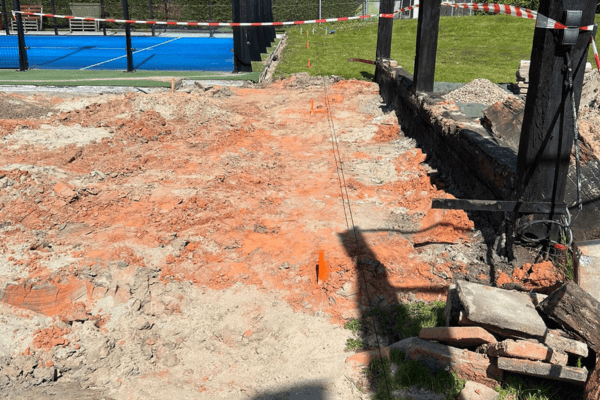
We supervise the permit process and provide an acoustic study if necessary. The existing track is then prepared: old jobs are removed and the foundation is checked or adjusted.
We install the new sports floor, cage construction with glass walls, fencing, lighting and artificial grass. The padel courts are delivered fully ready to play and inspected according to KNLTB and NOC*NSF guidelines.
Allesvoorpadel offers a wide range of padel courts, suitable for conversion projects at tennis clubs and sports parks. Depending on your location, budget and appearance, we recommend the best execution, from robust pillar cages to modern panorama courts with maximum sightlines.
When converting, we almost always work with courts specifically designed for Dutch weather conditions and intensive outdoor use. Thanks to the compact dimensions of 20 x 10 metres per padel court, we can efficiently build several courts on the space of one or two tennis courts. We will gladly advise you which type of court is best suited to your accommodation, budget and desired appearance.
A conversion project can be fully customised with various extras. For example furniture, lighting or various sponsorships. This creates a padel facility that not only complies technically, but also perfectly matches the identity and atmosphere of your tennis club or sports park.
Professional guidance from initial analysis to ready-to-play delivery.
Padel is the fastest growing sport in the Netherlands and clubs that join now will reap the benefits for years to come. Clubs that convert tennis courts to padel see their memberships grow by dozens to sometimes hundreds of new members, often resulting in waiting lists. While tennis is sometimes under pressure locally, padel is attracting young people, families and active 40-plussers looking for an accessible, social sport.
Moreover, the occupancy rate of a padel court is considerably higher than that of a tennis court: an average of 180 to 200 players per court per week when properly rented out. That means more canteen revenue, more sponsorship opportunities and a livelier sports park, seven days a week. If you wait too long, you run the risk that the padel club down the road will be ready before you are. Allesvoorpadel makes sure your club or sports park makes the transition smoothly, professionally and within budget.
One standard tennis court usually fits up to three full padel courts side by side with a small extension. With two contiguous tennis courts, there is even room for four padel courts, often in an efficient millwork arrangement with a central square.
Costs for a conversion start from approximately €75,000.00 per padel court, excluding VAT. The final price depends on the state of the existing foundation, the chosen track model, lighting and additional options. If the existing foundation can be reused, the investment is often lower than for a completely new construction. Incidentally, Mateco tennis courts can be even cheaper if they are of good quality.
In many cases, a conversion fits within a tennis club's existing zoning plan, making the process smoother. Nevertheless, an environmental permit is almost always required, especially if the site is close to homes. An acoustic study is then usually required. Allesvoorpadel can club guidance in the entire licencestraject or, for example, flora and fauna surveys or light pollution surveys.
Sometimes yes, but not always. It depends on the type of subsoil, the state of the foundation and the soil conditions. During the site analysis, our specialists assess whether the existing pavement is suitable as a basis for a padel court, or whether additional groundwork is needed.
Sometimes yes, but not always. It depends on the type of subsoil, the state of the foundation and the soil conditions. During the site analysis, our specialists assess whether the existing pavement is suitable as a basis for a padel court, or whether additional groundwork is needed.



Wir sehen, dass Sie diese Website aus Deutschland besuchen.
Für die deutsche Version klicken Sie bitte auf den untenstehenden Button.